
Freedom
- Home
- Freedom Struggle & Contributions

Role in Resisting British Oppression
Defiant Leadership
Khajya Naik played a decisive role in mobilizing his community against British exploitation and unjust policies. He encouraged unity and collective action, transforming scattered discontent into organized resistance that challenged colonial authority at the grassroots level.
Early Life
Khajya Naik grew up in a close-knit tribal community, learning courage, unity, and responsibility. These early experiences shaped his sense of justice and leadership.
Personal Values
Guided by honesty, courage, and communal welfare, Khajya Naik’s values were shaped by elders, traditions, and ancestral stories, influencing his leadership and decisions.
Resistance Against British Rule
Khajya Naik organized his community against British exploitation, inspiring collective action, challenging injustice, and leaving a lasting legacy of courage, resistance, and tribal empowerment.
Notable Episodes
Major events

Early Uprising
Khajya Naik emerged as a leader during an early tribal uprising, communities to resist British exploitation and defend traditional land rights.

Collective Revolt
Khajya Naik led a decisive confrontation against British forces, symbolizing ultimate sacrifice and leaving a lasting mark on tribal resistance history.

Final Stand
Khajya Naik led a decisive confrontation against British forces, symbolizing ultimate sacrifice and leaving a lasting mark on tribal resistance history.
Defiant Stand
movements
Early Resistance
Grassroots Unity
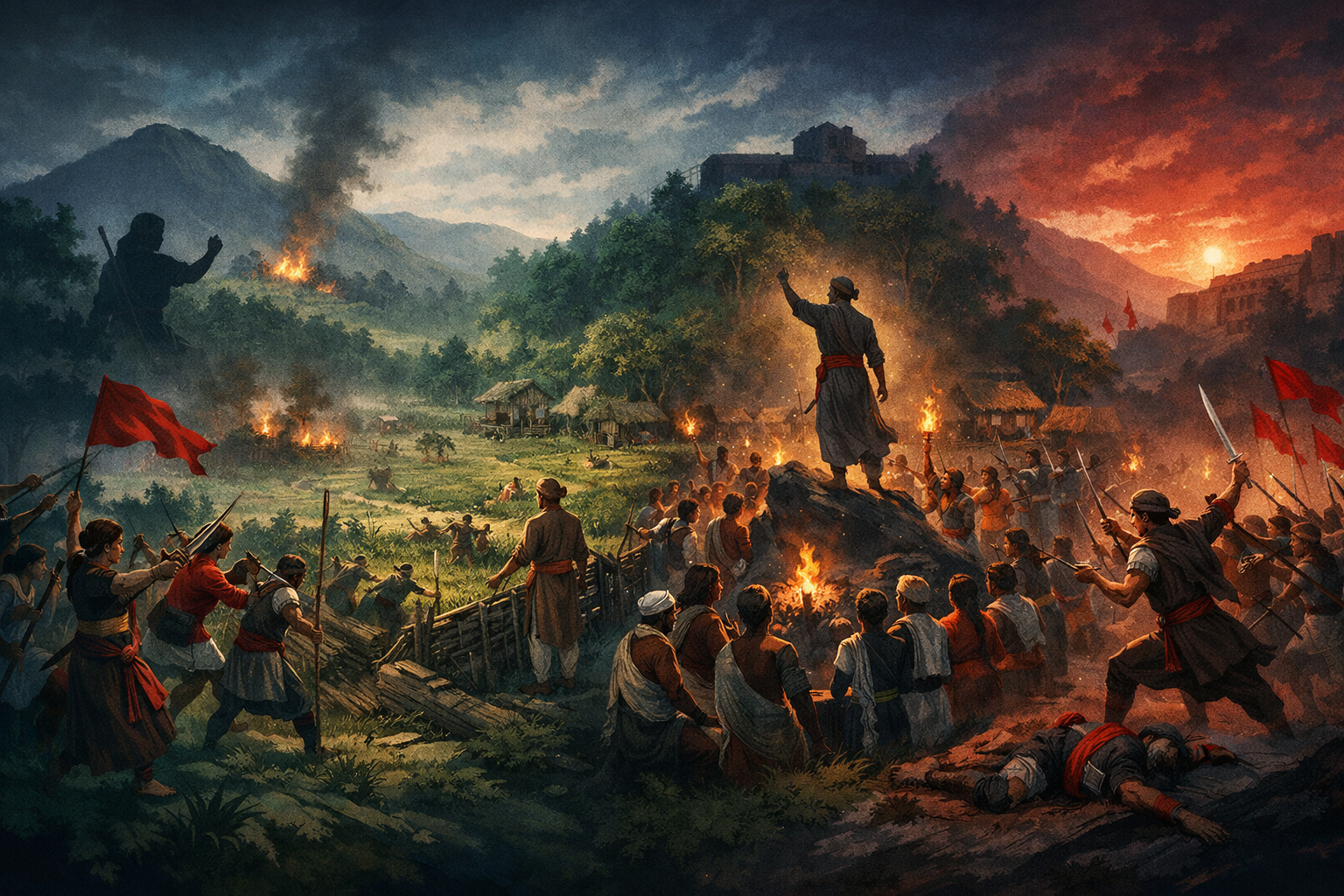
Khajya Naik initiated early resistance by uniting nearby tribal communities against unfair British policies. These efforts transformed local dissatisfaction into organized collective action.
Land Protection
Territorial Defense
He led movements focused on defending ancestral land from colonial control, emphasizing the importance of land as the foundation of tribal identity and survival.
Community Mobilization
Collective Action
Khajya Naik mobilized villages across regions, encouraging coordinated participation and shared responsibility in resisting exploitation and maintaining tribal autonomy.
Final Uprising
Defiant Stand
Khajya Naik initiated early resistance by uniting nearby tribal communities against unfair British policies. These efforts transformed local dissatisfaction into organized collective action.
Enduring Influence
leadership
Khajya Naik’s leadership brought lasting change to local tribal communities by strengthening unity, confidence, and collective identity. Through his guidance, people who once faced exploitation and fear began to organize, communicate, and act together. His emphasis on shared responsibility encouraged communities to protect their land, traditions, and social values.
Beyond resistance, his leadership nurtured self-respect and awareness among the people. Communities became more conscious of their rights and cultural heritage, fostering resilience that extended beyond his lifetime. Even after his struggles ended, the values he upheld—courage, unity, and dignity—continued to shape community life. His influence transformed local resistance into a lasting legacy of empowerment, inspiring future generations to stand firm against injustice and preserve their identity.
Khajya Naik’s leadership profoundly transformed local tribal communities by fostering unity and collective confidence. At a time when fear and exploitation were widespread, he encouraged people to stand together and recognize their shared strength. His ability to bring villages together helped create organized community structures where voices were heard and decisions were made collectively. This unity reduced isolation and empowered individuals to participate actively in protecting their rights and interests.
His influence extended beyond resistance to the revival of cultural pride and social awareness. Khajya Naik emphasized the importance of preserving traditions, customs, and a strong connection to ancestral land. Under his leadership, communities became more conscious of their cultural identity and the value of self-respect. This cultural awakening reinforced resilience and strengthened bonds between generations, ensuring continuity of heritage even during challenging times.
The long-term impact of his leadership remains visible in community memory and collective values. Khajya Naik’s example inspired future leaders and movements advocating justice, dignity, and autonomy. His legacy continues to guide local communities, reminding them that unity, courage, and commitment to shared values can create lasting change beyond any single struggle.