Legacy & History
- Home
- Legacy

How His Actions Shaped Regional Resistance
Regional Impact
Khajya Naik’s actions transformed local struggles into a unified regional resistance, inspiring collective action, coordination, and shared identity among neighboring communities against colonial oppression.
Collective Mobilization
Khajya Naik’s actions encouraged scattered tribal communities to unite beyond village boundaries. His leadership demonstrated the power of collective resistance, transforming isolated struggles into a coordinated regional movement.
Organized Defiance
Through planned resistance and strategic use of local knowledge, Khajya Naik set examples that were adopted across neighboring regions. His methods influenced how communities organized, communicated, and resisted oppression together.
Legacy Continuation
The regional resistance shaped by Khajya Naik did not end with his struggle. His actions inspired continued defiance and leadership, ensuring that resistance remained active and deeply rooted in shared regional identity.
Regional Solidarity
Khajya Naik’s leadership helped forge a shared regional identity among tribal communities. His actions strengthened solidarity across villages, uniting people through common purpose, resistance, and collective dignity.
Enduring Legacy
Influence on freedom

Leadership Example
His style of community-based leadership influenced emerging leaders, showing that unity, discipline, and collective action could challenge powerful forces.

Strategic Influence
The methods he used in organizing resistance provided practical lessons for later movements, shaping strategies of coordination and grassroots mobilization.

Living Memory
Stories of Khajya Naik’s struggle continued to circulate across regions, motivating future freedom fighters to carry forward his ideals and vision.
Recognition in History Books and Folklore
Living Memory
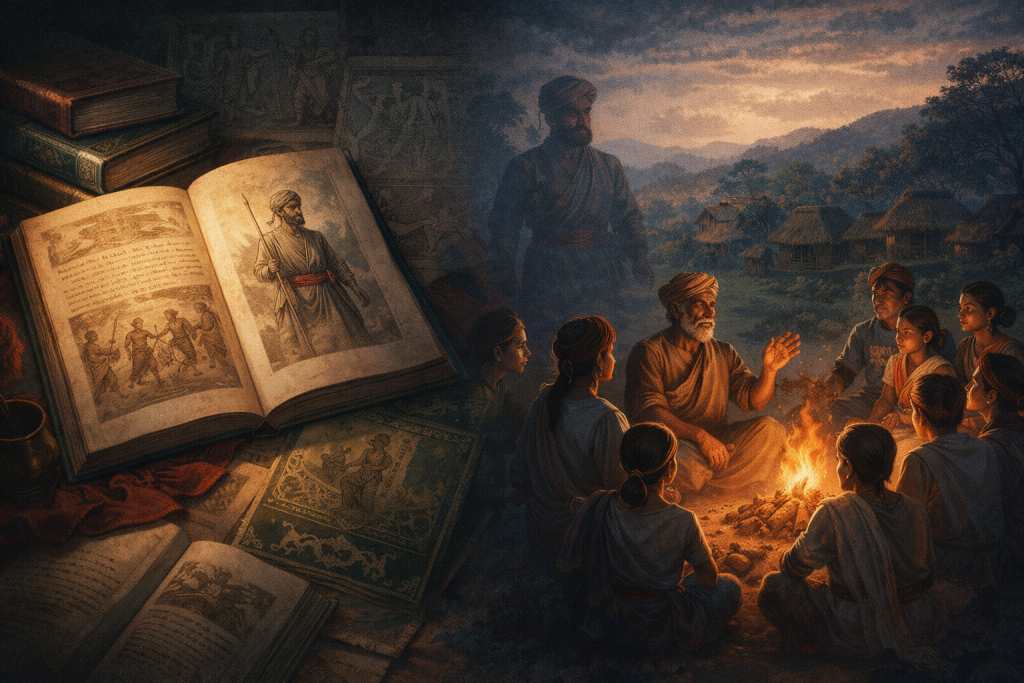
Khajya Naik’s contribution has been preserved through both written history and oral tradition. In history books, he is remembered as a courageous tribal leader who challenged colonial authority and defended the rights of his people. Scholars and regional histories recognize his role in organized resistance, placing his actions within the broader narrative of India’s freedom struggle, especially in tribal contexts often overlooked.
Alongside formal records, Khajya Naik lives vividly in folklore and oral storytelling. Songs, local narratives, and community memories pass down stories of his courage, sacrifice, and leadership from one generation to the next. These folk traditions keep his legacy alive at the grassroots level, ensuring that his name represents resistance, dignity, and identity. Together, history books and folklore preserve him not just as a historical figure, but as a living symbol of collective memory and inspiration.