




Historical documents
Research Articles
An overview of Khajya Naik’s leadership and his role in shaping organized tribal resistance against colonial rule.
Explores how land rights and cultural identity became central to resistance movements led by Khajya Naik.
Examines Khajya Naik’s community-based leadership model and its impact on regional resistance movements.
Discusses Khajya Naik’s remembrance through folklore, oral traditions, and lasting influence on future generations.
Famous Write
Research Material
Oral histories and research materials play a vital role in understanding the life, struggle, and legacy of Khajya Naik. Much of his story has been preserved through spoken narratives passed down across generations within tribal communities. These oral accounts capture emotions, values, and lived experiences that formal records often overlook, offering deeper insight into community memory and identity.
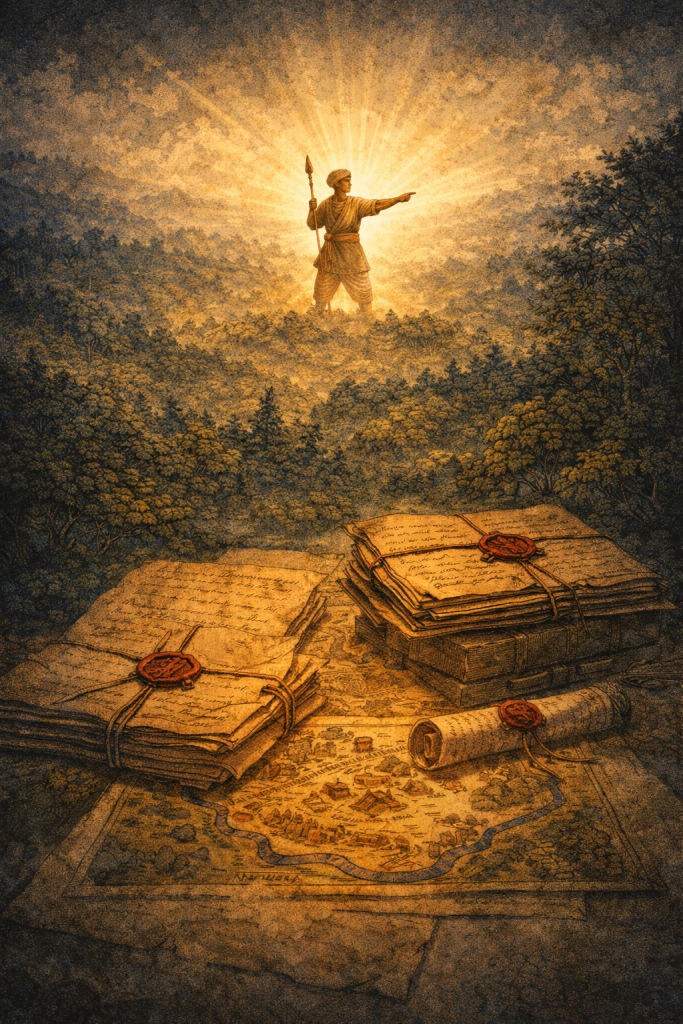
Alongside oral traditions, modern research materials—such as academic studies, regional histories, fieldwork notes, and cultural documentation—help contextualize these narratives within broader historical frameworks. Researchers have drawn upon folklore, songs, interviews, and archival references to reconstruct events and interpret their significance.
Together, oral histories and research materials form complementary sources of knowledge. While oral traditions keep memory alive at the grassroots level, research provides structure, analysis, and wider historical connections. This section brings both together to present a balanced, respectful, and enriched understanding of Khajya Naik’s enduring influence and the community that remembers him.
Collaboration
Dedicated to preserving the life, legacy, values, and historical contributions of Khajya Naik for future generations through authentic research.

A legacy forged in resistance, remembered in history.”
Developed by Creaa Designs
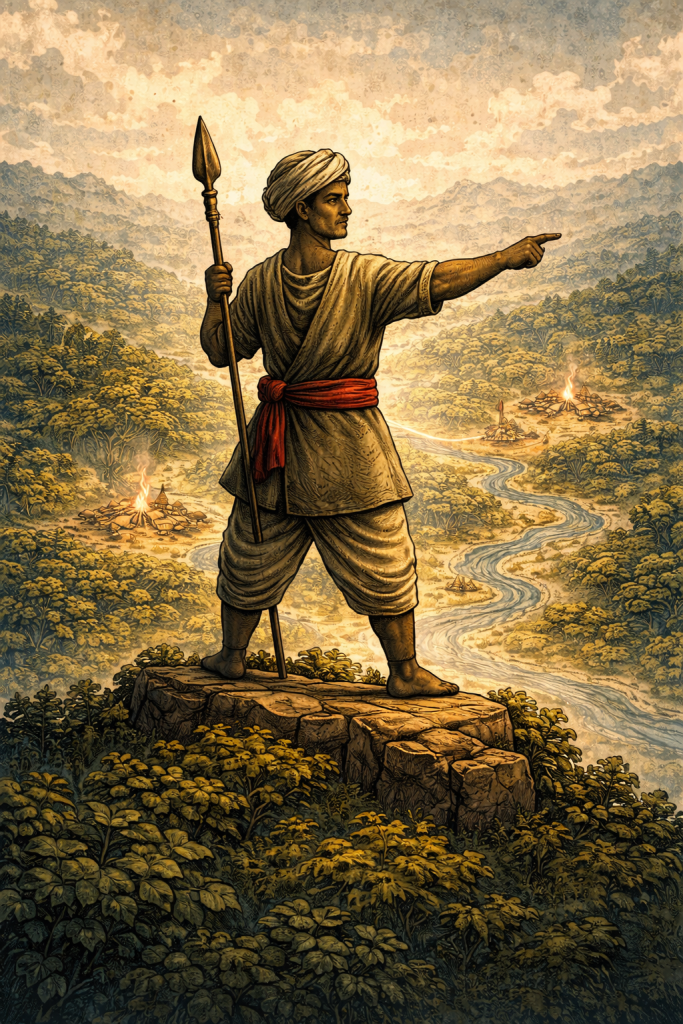
Khajya Naik stands as a significant figure in the history of tribal resistance against colonial rule. Emerging from a deeply rooted tribal society, he became a symbol of courage and collective defiance during a period marked by exploitation, land dispossession, and cultural suppression. His leadership was not sudden but evolved through lived experiences of injustice faced by his community.
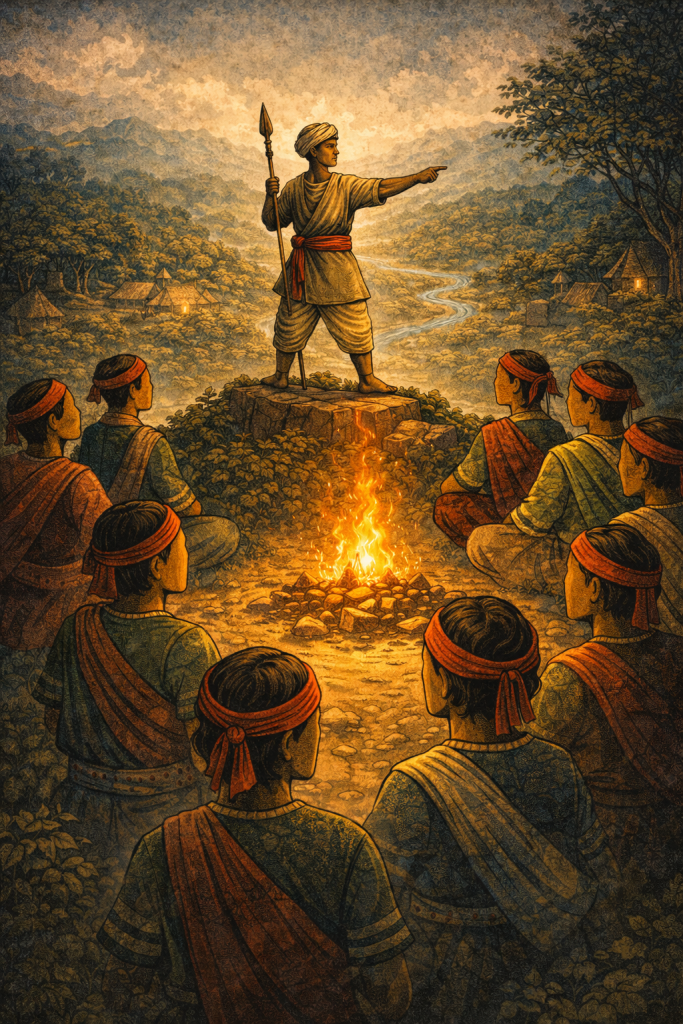
Rather than relying on individual authority, Khajya Naik emphasized unity and collective responsibility. He mobilized villagers across regions, encouraging organized resistance grounded in shared identity and mutual trust. His approach transformed scattered local grievances into a coordinated movement that challenged colonial dominance at the grassroots level.
What distinguished Khajya Naik was his ability to combine cultural values with resistance. He drew strength from traditional customs, oral histories, and communal bonds, ensuring that resistance was not merely political but deeply cultural. This integration helped sustain morale and solidarity even under severe repression.
Khajya Naik’s resistance may not always appear prominently in mainstream historical narratives, yet its impact on tribal consciousness remains profound. His actions demonstrated that organized community leadership could confront oppressive systems, leaving a legacy that continues to inspire movements for justice and dignity.
Land has always been central to tribal life, serving as a source of livelihood, culture, and identity. For Khajya Naik and his people, the loss of land under colonial administration was not merely economic—it threatened their very existence. Colonial policies disrupted traditional ownership systems, placing immense pressure on tribal communities.
Khajya Naik recognized that resistance must begin with the protection of land. He emphasized that defending ancestral territory was inseparable from preserving cultural identity and social structure. Under his leadership, movements emerged that challenged unfair land practices and asserted community rights over forests and villages.
These revolts were deeply rooted in cultural consciousness. Rituals, symbols, and collective memory played a crucial role in uniting people around a common cause. Khajya Naik’s leadership ensured that resistance remained disciplined, purposeful, and rooted in shared values rather than isolated anger.
The connection between land and identity shaped the nature of these movements. By framing resistance as a struggle for dignity and survival, Khajya Naik helped his people reclaim a sense of ownership over their future. His legacy highlights how land-based struggles became powerful expressions of identity and resistance.
Khajya Naik’s leadership offers a powerful example of community-based resistance during colonial rule. Unlike centralized or hierarchical models of leadership, his approach was rooted in collective decision-making and shared responsibility. He functioned as a guide and organizer rather than an authoritarian figure.
His leadership style was shaped by tribal traditions where councils, elders, and consensus played vital roles. This cultural framework enabled effective communication and trust, allowing resistance movements to grow organically across regions. Khajya Naik’s ability to listen, coordinate, and inspire made him a respected figure among diverse communities.
In the face of colonial repression, his leadership emphasized resilience rather than fear. Even when movements were suppressed, the sense of unity he fostered remained intact. This ensured continuity of resistance and prevented fragmentation. His influence extended beyond immediate action, shaping how communities organized themselves socially and politically.
Khajya Naik’s leadership demonstrates that effective resistance does not always depend on formal power. Instead, it emerges from shared purpose, cultural grounding, and moral authority. His model of leadership continues to offer valuable lessons on grassroots mobilization and collective strength.
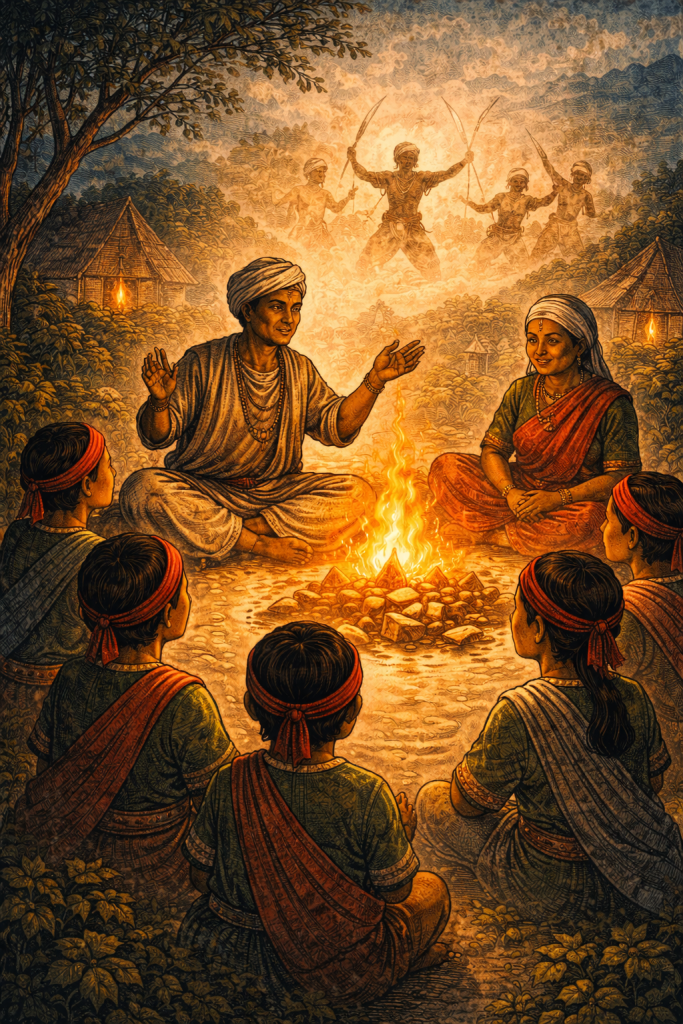
Khajya Naik’s legacy extends far beyond written records and official histories. While colonial archives and regional studies document aspects of his resistance, much of his story survives through oral traditions, folklore, and community memory. These narratives preserve not just events, but values, emotions, and identity.
Songs, stories, and local retellings portray Khajya Naik as a symbol of courage, sacrifice, and leadership. Passed down across generations, these accounts keep his memory alive in everyday cultural life. They ensure that his struggle remains relevant, especially among communities whose histories were often marginalized in formal documentation.
This dual legacy—recorded and remembered—adds depth to his historical significance. While books provide structure and chronology, folklore offers meaning and connection. Together, they form a living archive that reflects the collective consciousness of the people.
Khajya Naik’s enduring influence lies in this shared remembrance. His story continues to inspire discussions on justice, identity, and resistance. By existing both within and beyond history books, his legacy remains active, shaping how communities understand their past and envision their future.